AANI-FB-0178-1 Antenna Report: Gain, VSWR & Efficiency
The AANI-FB-0178-1 antenna report provides critical measured metrics for designers: peak gain between -0.7 to -0.8 dBi, radiation efficiency of 24–25%, and a VSWR typically ≤2.5 across the 902–928 MHz range. These parameters are vital for LoRa and ISM band link budgets, directly influencing battery life and signal range in embedded IoT applications.
1 — Background: The AANI-FB-0178-1 FPC Solution
The AANI-FB-0178-1 is a flexible printed circuit (FPC) antenna designed for the 902–928 MHz ISM band. Its low-profile form factor allows for integration into compact trackers and LoRa gateways, supporting curved mounting surfaces while requiring specific ground plane considerations to stabilize radiation patterns.
| Parameter | Typical Value (902–928 MHz) |
|---|---|
| Frequency Range | 902–928 MHz |
| Peak Gain | ≈ -0.7 to -0.8 dBi |
| Radiation Efficiency | ≈ 24–25% |
| VSWR | ≤ 2.5 |
| Impedance | 50 Ω Nominal |
2 — Measured Gain and Radiation Performance
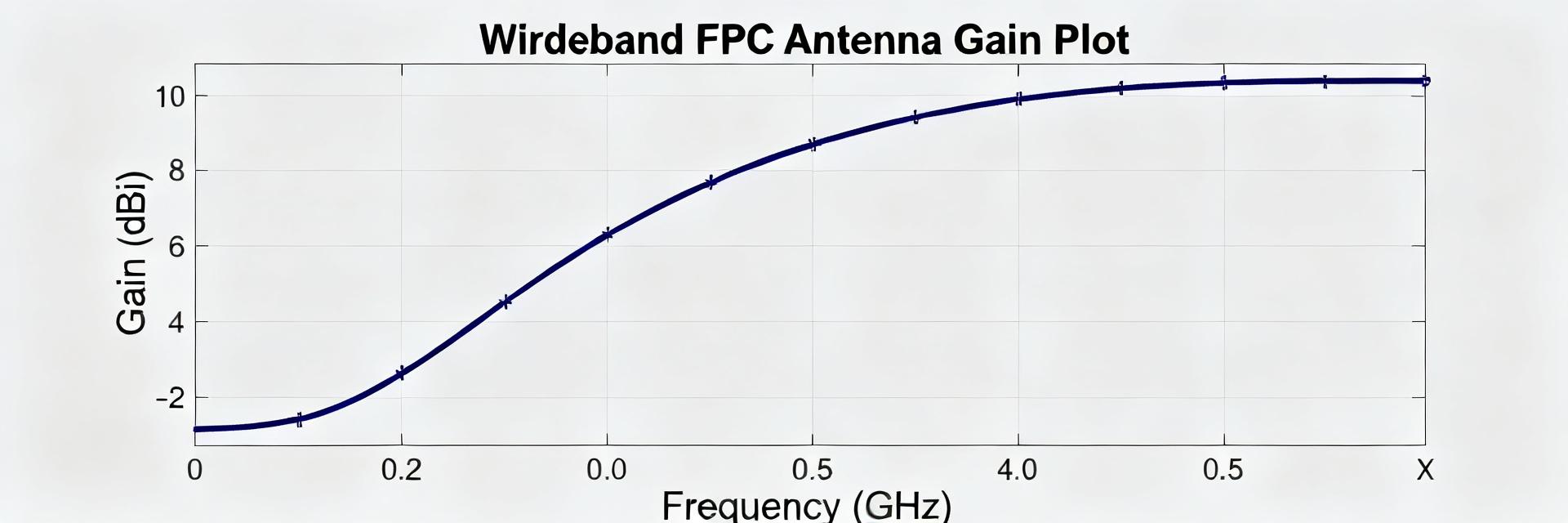
Peak gain represents the highest free-space directivity, while realized gain accounts for mismatch losses. In anechoic chamber testing, the AANI-FB-0178-1 exhibits a negative dBi gain, which is typical for small-form-factor antennas. A -0.8 dBi gain equates to a slight reduction in Effective Isotropic Radiated Power (EIRP) compared to a 0 dBi reference, impacting range by roughly 10% in high-sensitivity LoRa links.
3 — VSWR Analysis & Impedance Matching
VSWR (Voltage Standing Wave Ratio) quantifies the impedance mismatch. For the AANI-FB-0178-1, a VSWR of ≤2.5 is targeted to ensure power delivery without excessive transmitter stress. Tuning resonance typically involves adjusting the ground plane keep-out area or adding an L-network (series inductor or capacitor) to compensate for shift caused by the device enclosure.
4 — Efficiency and Placement Constraints
Radiation efficiency, measured at 24–25%, indicates the fraction of power successfully converted to RF waves. Integration failure modes often involve placing the FPC too close to batteries, metal shields, or screws, which detunes the resonance and drops efficiency below 15%. A minimum 15mm clearance from large metal objects is recommended to maintain the reported 25% performance.
5 — Design Checklist for AANI-FB-0178-1
- Ground Plane: Ensure a 30x40 mm reference ground for stabilizing peak gain.
- Feed Line: Keep the 50 Ω trace as short as possible to the matching network.
- Enclosure: Always perform a final VSWR sweep inside the plastic housing.
- Testing: Verify field RSSI at a fixed distance to confirm link budget stability.
Summary
The AANI-FB-0178-1 provides a reliable, flexible solution for 902–928 MHz applications. With a peak gain of -0.8 dBi and 25% efficiency, it balances size and performance. Success depends on careful VSWR tuning and maintaining ground plane integrity to avoid significant signal degradation.
Frequently Asked Questions
How does AANI-FB-0178-1 VSWR affect my transmitter and what should I target?
VSWR affects reflected power and can change transmitter efficiency; aim for <2.0 where possible, but ≤2.5 across the LoRa band is often acceptable for low-duty IoT devices. Use a VNA sweep to confirm band coverage and add a simple L-network if resonance is off by more than a few MHz.
What performance can I expect from AANI-FB-0178-1 in a LoRa node?
Expect peak gain near -0.7 to -0.8 dBi and radiation efficiency around 24–25% on a well-configured board. In practice, layout and enclosure choices can recover 1–3 dB of system gain, so prototype early and iterate placement.
How should I tune AANI-FB-0178-1 VSWR on a prototype PCB?
Start with a VNA sweep on the final PCB. If resonance is low/high, adjust ground clearance near the feed or shorten/lengthen the feed trace. Add minimal matching (series L or series C + shunt element) and remeasure in the enclosure.
Does ground plane size impact the AANI-FB-0178-1 efficiency?
Yes, ground plane size and proximity to metals significantly impact efficiency. Maintaining a ground plane keep-out and testing with a 30x40mm reference plane is recommended for optimal 25% efficiency.