0402 Zero-Ohm Resistor Market & Spec Snapshot — Latest Trends
Recent PCB assembly and continued miniaturization trends have driven a measurable uptick in the use of SMD 0402 jumpers and 0 Ω links across consumer and industrial boards. This article provides a concise market snapshot, clear spec summaries, and actionable guidance for designers and buyers evaluating compact jumper options.
Introduction
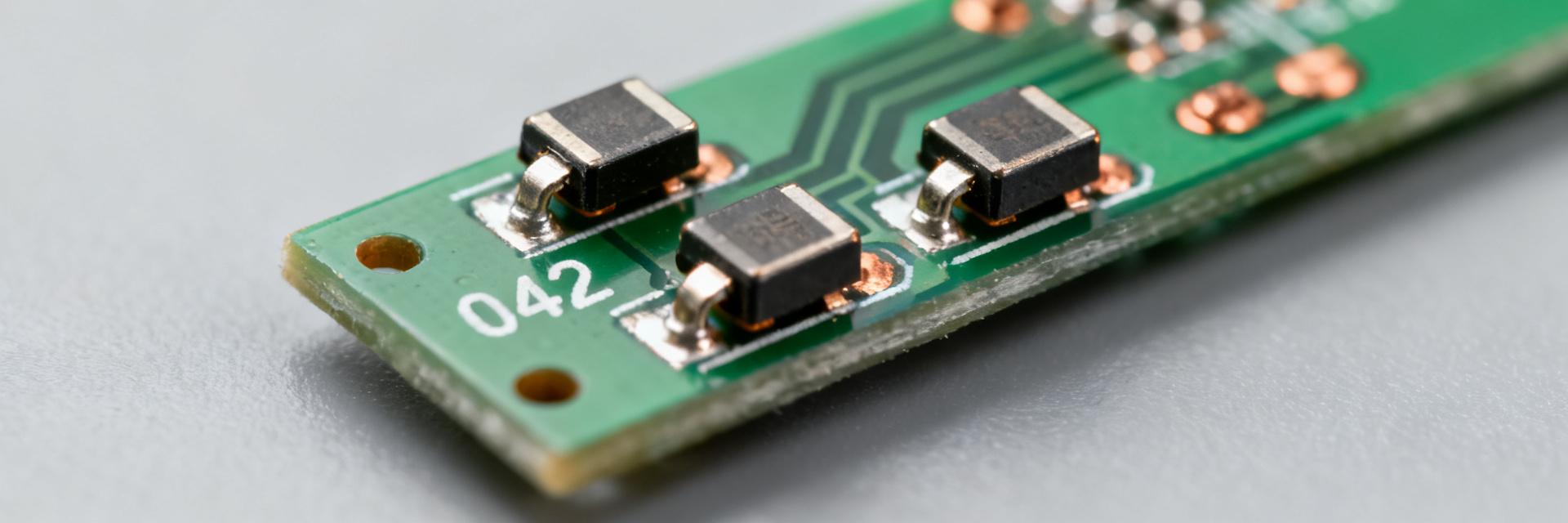
Demand for space-saving components and higher board density favors tiny passive jumpers that act as single-solder configuration links or shorting elements. The goal here is a quick, data-driven brief: where 0402 0 Ω links are growing, the key mechanical and electrical specs to check, and concrete layout and procurement steps to reduce assembly risk. Engineers will find a specs table, a footprint checklist, and manufacturing guidance for reliable deployment.
Background: Why the 0402 zero-ohm resistor matters
What a zero-ohm resistor is and its typical roles on a PCB
Point: A 0 Ω resistor is effectively a single-solder jumper used where a removable or configurable link is useful.
Evidence: In practice it replaces wire jumpers and mechanical shunts for configuration, current-path linking, and test/jig points.
Explanation: Using a part that is handled like a resistor keeps pick-and-place flows intact while enabling easy rework and automated assembly verification without adding discrete wiring steps.
Why the 0402 package gained traction (miniaturization & cost)
Point: The SMD 0402 package gained traction due to board-area savings and modern pick-and-place capability.
Evidence: Compared with larger jumpers, 0402 reduces route congestion on high-density boards and can lower unit cost at scale.
Explanation: For designs where space and automated placement dominate, SMD 0402 offers an attractive balance, replacing larger 0805 jumpers or hand-soldered wires while accepting tighter assembly tolerances.
Market & Trends Snapshot
Adoption Vectors
Point: Adoption is strongest where volume and density converge: consumer electronics, compact IoT modules, certain automotive subsystems, and constrained industrial controllers.
Evidence: Industry surveys and market analyses report steady growth driven by miniaturization and placement speed. Explanation: Designers prioritize pick-and-place compatibility and board real estate.
Supply & Pricing Pressure
Point: Small-package resistors can show sensitivity to supply fluctuations. Evidence: Sourcing considerations include reel quantities and termination variations. Explanation: Teams should budget for generic jumpers but plan alternate part numbers to mitigate risk.
Technical Specs & Performance
Mechanical and dimensional specs for SMD 0402
Point: Mechanical specs and footprint guidance determine assembly yield. Evidence: Nominal 0402 dimensions and pad geometries influence solder fillet quality.
| Parameter | Typical Value | Recommended PCB Guidance |
|---|---|---|
| Nominal size | 1.0 × 0.5 mm | Verify metric footprint to board fab library |
| Pad length | ~0.6–0.7 mm | Use elongated pads for better solder fillet |
| Stencil aperture | 60–80% per pad | Adjust aperture to target paste volume |
Electrical specs and performance characteristics
Point: Electrical behavior of a 0 Ω link is dominated by parasitics. Evidence: Nominal resistance is 0 Ω, but current capacity and inductance matter. Explanation: Check manufacturer max current for DC routing; for RF, verify parasitic inductance.
PCB Layout Best Practices
Footprint & Soldering: Stencil aperture tuned to pad size and consistent orientation mitigate paste imbalance. Center the part with symmetric pads and maintain accurate reflow ramp rates.
High-Frequency & Thermal
Parasitics: A single 0402 adds measurable inductance. For high currents, consider parallel 0402 links to lower cumulative parasitics; keep traces short to control loop inductance.
Manufacturing, Testing & Reliability
Yields & Inspection: Common issues include tombstoning and misalignment. AOI criteria should check component presence and fillet formation. Adding test points enables quick verification of short links.
Environmental Qualification: Necessary for critical applications. Request supplier test summaries for solderability and thermal-cycle endurance, specifying thresholds for automotive or industrial use.
Selection & Sourcing Checklist
- Spec Checklist: Package code 0402, max DC current, power rating, termination finish, and operating temp range.
- Procurement Tips: Order appropriate reel lengths, prefer multi-sourcing, and confirm RoHS/lead-free plating. Use precise part-number fields to avoid production delays.
Summary
- 0402 zero-ohm resistors are a compact, pick-and-place friendly solution for high-density boards.
- Mechanical and electrical specs—dimensions, pad geometry, and current capacity—are critical for reliability.
- Follow a procurement checklist and implement AOI/ICT checks; consider parallel links for high-current use-cases.
Frequently Asked Questions
What is the typical current capacity of a 0402 zero-ohm resistor?
Typical capacity depends on construction; many handle tens to low hundreds of milliamps. Designers should verify manufacturer-rated max current and derating curves for their thermal conditions.
When should designers prefer multiple parallel 0402 links over a single larger jumper?
Parallel links are appropriate when space constraints exist but higher current or lower inductance is required. Using multiple parts preserves placement automation while reducing effective series resistance.
Are there special footprint recommendations for reliable 0402 zero-ohm resistor solder joints?
Yes. Use symmetric pads, target 60–80% stencil aperture, and ensure pick-and-place accuracy. These steps minimize tombstoning; adjust pad length slightly for more robust fillets in high-volume runs.